


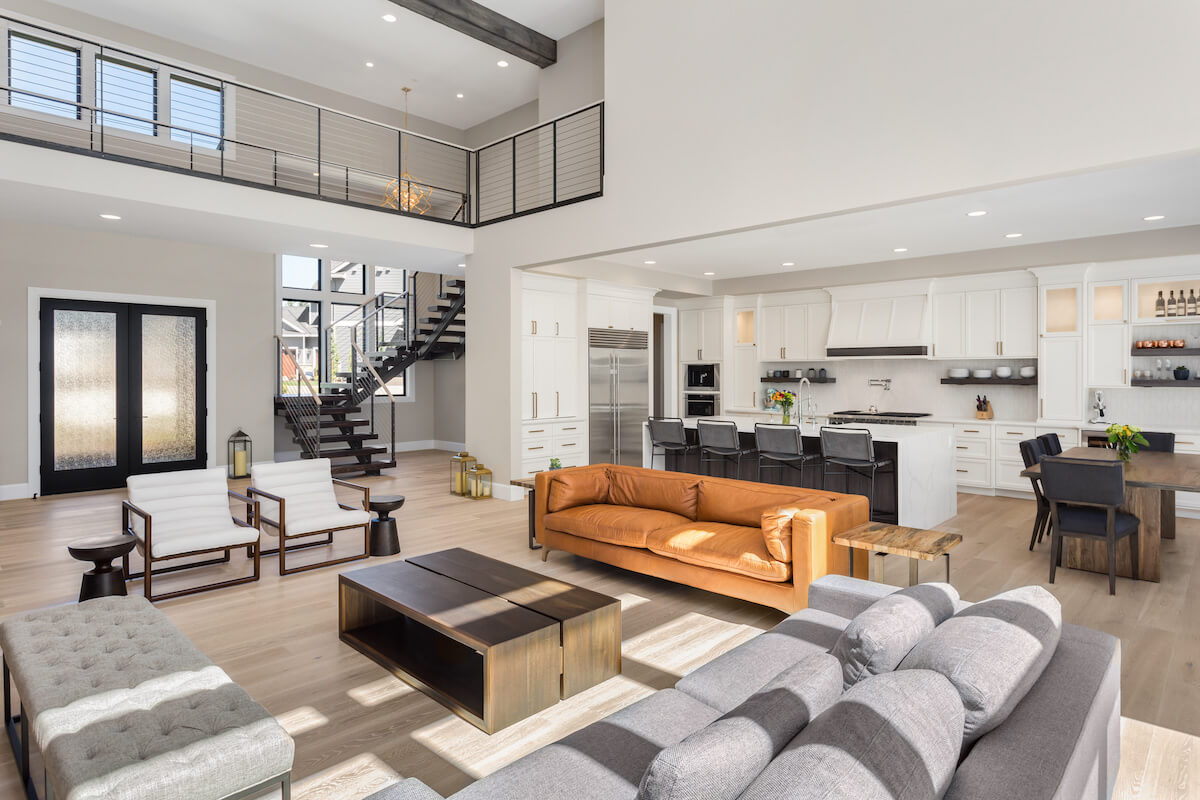
 Big Rooms, Big Opportunities
We’ve all heard the phrase “the bigger, the better.”
But when it comes to decorating, big spaces can bring oversized challenges. (Though, to be fair, an overstuffed sofa solves a lot.)
If your furniture is too small for your room, the space can feel less like a welcoming home and more like an empty cavern. You could lean into that and create a cave-inspired interior — but caves don’t exactly get great Wi-Fi.
Instead, use proven interior design principles to choose décor that matches the scale of your room. When proportion is right, even the largest space can feel warm, intentional, and beautifully balanced.
How to Decorate to Scale
Before you makeover a large space, you need to understand one foundational concept: scale.
Scale refers to how the size of objects inside a room relates to the size of the room itself. When scale is correct, a space feels cohesive and thoughtfully designed. When it’s off, the room can feel awkward or unfinished.
In large rooms, the rules are the opposite of small spaces:
-
Go bigger.
-
Don’t feel pressured to make every piece ultra-functional.
-
Allow room for statement pieces that are simply beautiful.
You have space — use it.
That said, whether your room is small or large, the process for finding the proper scale is the same: measure everything.
Ask yourself:
-
How much of the room should this piece fill?
-
Should the sofa anchor the entire wall?
-
How much breathing room do I want around it?
For example, if you want a sofa flanked by two side tables to span the width of your living area, measure the full width first — then shop within those exact dimensions.
A Practical Layout Trick
If you’re unsure how furniture should be arranged, try this designer-approved method:
-
Buy blue painter’s tape.
-
Tape off shapes on the floor representing sofas, tables, and chairs.
-
Walk around the shapes as if the furniture were already there.
This helps you:
-
Visualize scale
-
Test traffic flow
-
Adjust proportions before committing
If something feels too small, too crowded, or awkwardly placed — reposition and try again.
Once the layout feels balanced, measure those taped outlines and use those dimensions when shopping.
5 Big Room Ideas That Make a Big Impression
A large room doesn’t just allow for bigger furniture — it opens the door to design opportunities that would overwhelm smaller spaces.
In a big room, you can:
-
Play with bold prints
-
Install dramatic built-ins
-
Layer textures
-
Anchor seating areas with statement pieces
-
Create multiple functional zones within one space
These design ideas allow you to live large — without losing warmth or cohesion.
1. Divide your large room into sections
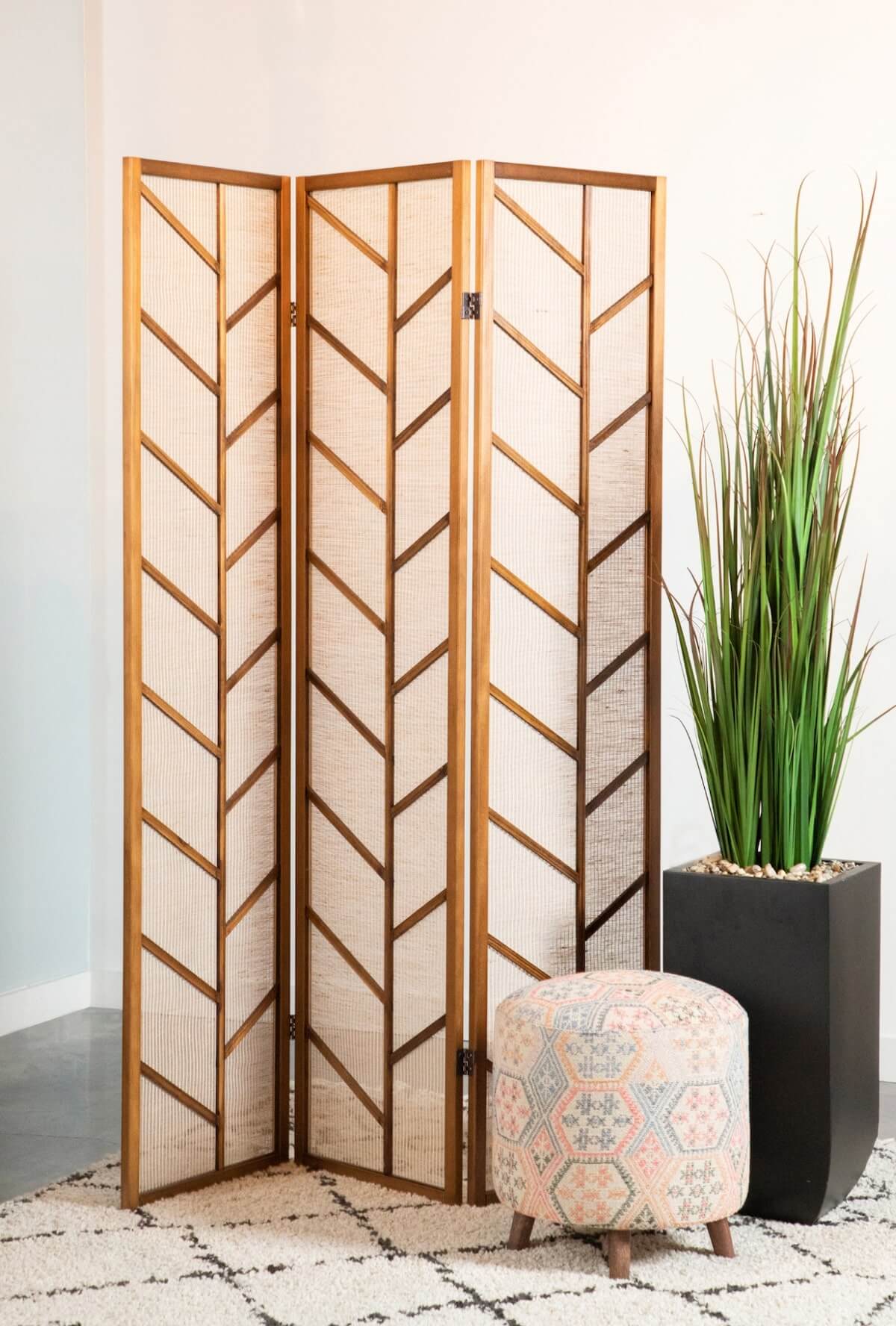
Divide and Conquer
If you already own smaller-scale furniture and aren’t ready to replace it, don’t worry — you can absolutely make it work in a larger room.
The key is to divide the space into purposeful zones.
Instead of thinking of your big room as one oversized area, think of it as several smaller rooms within a room. Use the painter’s tape method to map out where each zone should live before committing to a layout.
For example:
-
A large living room can be divided into a seating area, a home office corner, and a children’s play space.
-
A spacious bedroom can include a defined sleeping area, a reading nook, or a vanity setup.
Zoning allows smaller furniture to feel intentional rather than undersized.
Get the Look
Painter’s tape is great for planning — but it’s not a permanent design solution.
Once you’ve finalized your layout, use area rugs to visually anchor each section. Rugs naturally define boundaries and help each zone feel cohesive.
For additional separation, consider incorporating a room divider. This works especially well if there’s a portion of the space you’d prefer to keep slightly concealed, such as:
-
A home office
-
A play area
-
A dressing corner
A foldable 3-panel screen offers a clean, minimalist look, while a herringbone-patterned screen pairs beautifully with modern farmhouse interiors.
The goal isn’t to shrink your space — it’s to structure it.
When large rooms are thoughtfully divided, they feel dynamic, functional, and beautifully curated.
2. Create multiple seating areas
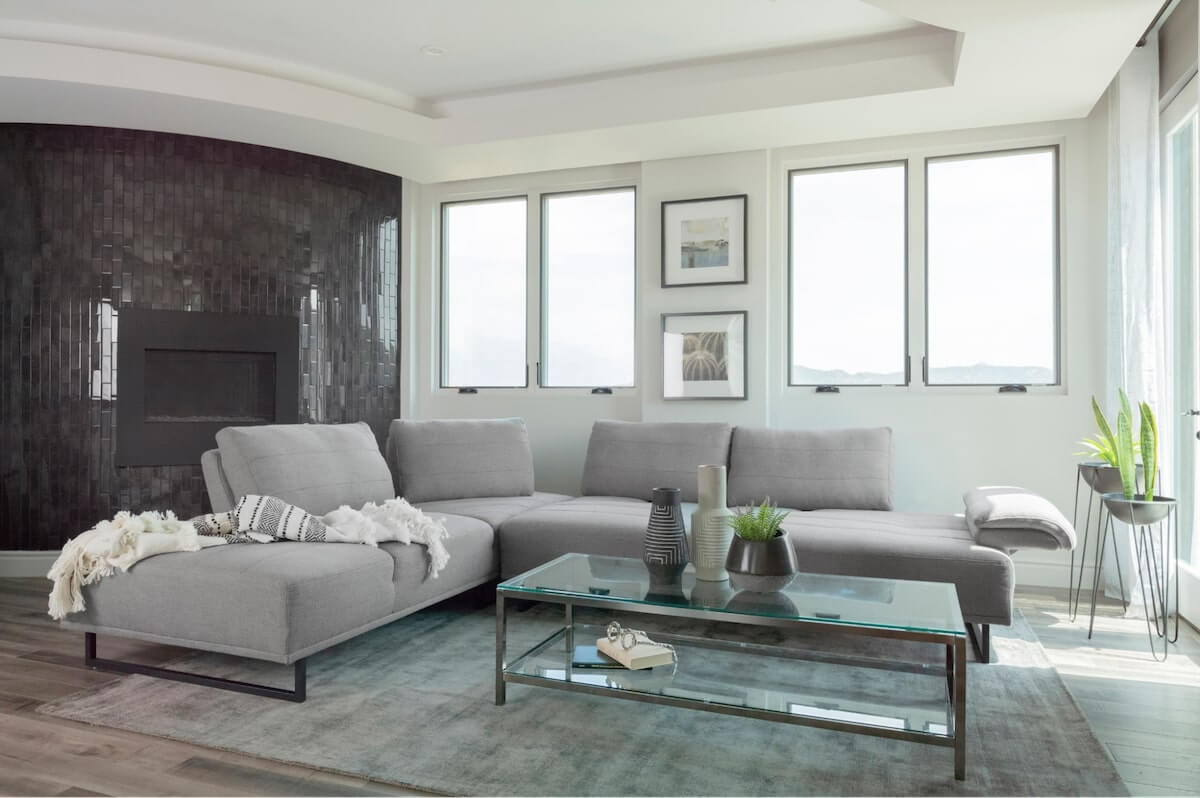
Create Multiple Seating Areas
Large rooms are made for entertaining.
By incorporating multiple seating areas, you create opportunities for conversation, comfort, and flexibility. During gatherings, guests can naturally break into smaller, more intimate groups rather than clustering in one oversized arrangement.
While this approach works beautifully in a great room or living room, it’s just as effective in a spacious dining room.
Get the Look: Living Room
Use furniture placement to visually distinguish one seating area from another.
A symmetrical layout is especially powerful in large spaces. Consider positioning two sectionals or sofas facing each other across the room to create balance and structure.
Place a coffee table in front of each sofa so that each grouping feels intentional and self-contained.
If you still have generous space between seating areas, add two armchairs with a side table between them to form a U-shaped arrangement. This fills negative space while maintaining flow.
The result is a layered layout that feels inviting rather than overwhelming.
Get the Look: Dining Room
Large dining rooms benefit from layered seating just as much as living areas.
Start with a substantial dining table as your main anchor. Then introduce a secondary seating zone along one or two walls using counter-height tables and coordinating stools.
This approach accomplishes two things:
-
Expands seating capacity for gatherings
-
Creates a distinction between formal dining and casual meals
The layered arrangement adds dimension to the room while making it more functional for everyday living and entertaining.
Large rooms thrive on intentional structure.
When seating areas are thoughtfully arranged, the space feels curated — not cavernous.
3. Let the light shine in
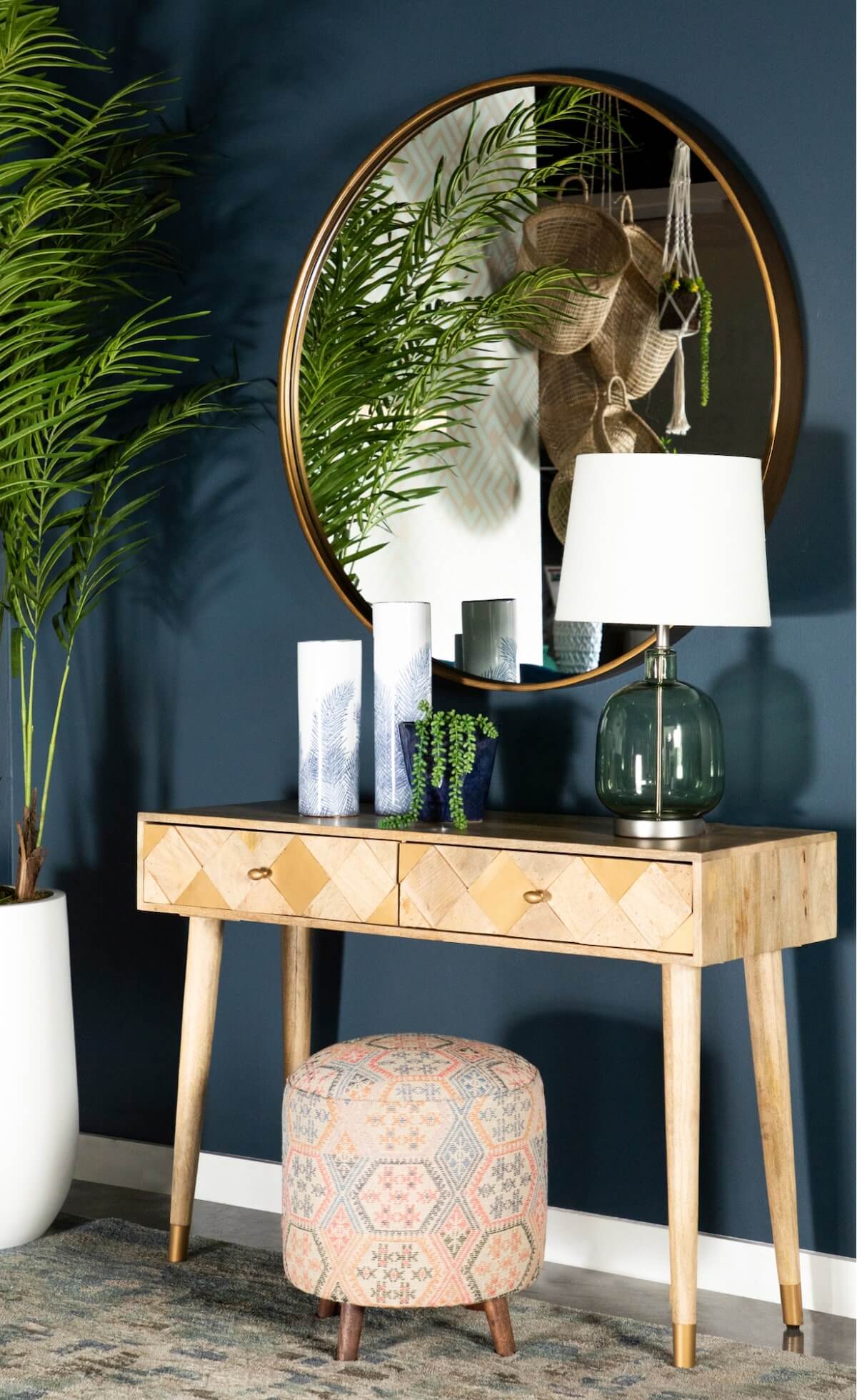
Layer Your Lighting
Even a large room with windows on multiple walls can have shadowed corners that natural light doesn’t quite reach. And if your space only has windows on one side, additional lighting becomes essential.
In expansive rooms, lighting isn’t just functional — it’s architectural.
Get the Look
Start with a dramatic overhead light fixture that adds both presence and practicality.
If a crystal chandelier isn’t your style, consider grouping pendant lights to create a custom statement installation. A clustered arrangement draws the eye upward and highlights high ceilings, reinforcing the scale of the room.
To amplify natural light, incorporate a statement mirror. A large round brass mirror, for example, reflects daylight into the room while adding warmth and sophistication.
And because large rooms offer generous floor space, take advantage of it. Opt for sculptural floor lamps rather than relying solely on table lamps. Taller lighting elements help balance vertical proportions and prevent the room from feeling bottom-heavy.
In big spaces, lighting should do more than illuminate — it should define the atmosphere.
4. Play with your color palette
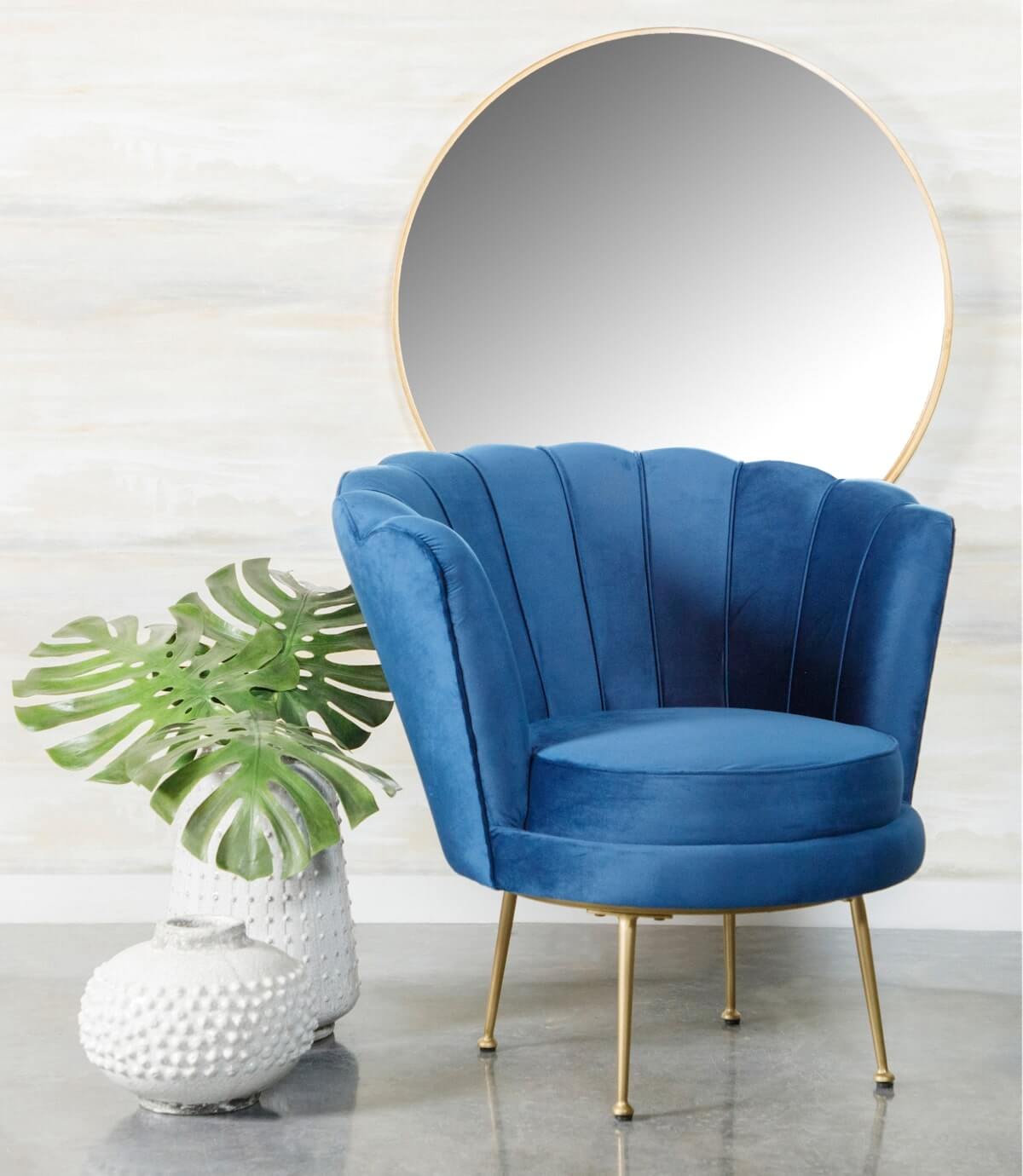
Be Intentional With Color
Large rooms offer flexibility that smaller spaces simply don’t. When it comes to color, you have room to experiment — whether you want to enhance the openness or create a more intimate atmosphere.
If your goal is to make your big room feel even more expansive, a neutral color palette is your strongest ally. Soft whites, warm earth tones, and layered beiges allow the space to breathe while maintaining warmth.
Unlike small rooms, however, large spaces can also handle darker hues without feeling cramped. In fact, deeper tones can make an oversized room feel more grounded and inviting.
Get the Look: Light & Airy
To emphasize scale and openness:
-
Stick with white or soft neutral walls
-
Layer warm earth tones
-
Incorporate organic textures
For an organic modern aesthetic, layer neutrals upon neutrals — varying texture rather than color.
If you prefer a more glamorous direction, introduce pops of color through artwork, textiles, throw pillows, or accent chairs. A channel-tufted barrel chair in a bold tone can instantly energize the room without overwhelming it.
Get the Look: Dark & Cozy
For a more intimate feel, choose a darker paint color to envelop the space.
To prevent the room from feeling heavy:
-
Pair dark walls with lighter furniture
-
Mix rich tones with soft, neutral upholstery
-
Add reflective surfaces for balance
Dark walls combined with a light-toned sofa create contrast while preserving brightness.
If your room features a chair rail, experiment with two-tone walls — lighter below and darker above. You can even paint the ceiling a deeper shade. Lowering visual height in this way can make lofty ceilings feel cozier and more intentional.
Large rooms don’t demand one color strategy — they reward thoughtful choices.
5. Add an architectural element with built-ins
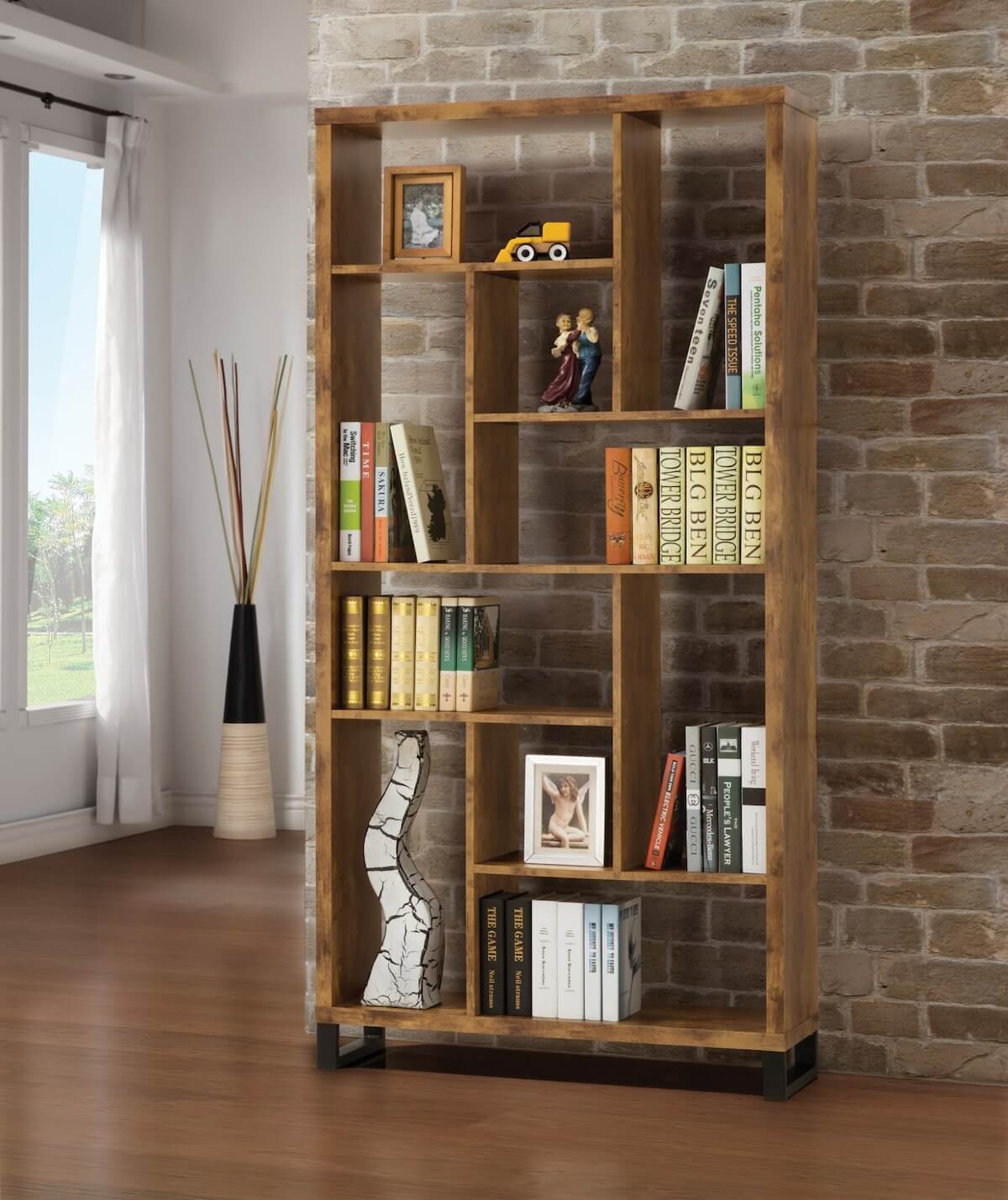
Add Architectural Impact With Built-Ins
If you’re struggling to fill a large space, built-ins can transform empty walls into intentional architectural features.
True built-ins offer both storage and visual structure. They anchor a room, add character, and provide space you can grow into over time. However, custom millwork can be costly.
The good news? You can achieve a similar effect without the full investment.
Get the Look
For a permanent solution, you can hire a professional to install custom built-ins or take the DIY route with wall-to-wall shelving. If you go this route, be sure to anchor shelves securely into wall studs to safely support books and decor.
For a simpler alternative
-
Measure the full width of your wall
-
Purchase multiple bookcases to span the space
You can create cohesion by selecting identical units, or lean into a curated, eclectic aesthetic by mixing complementary designs and styling them as a unified display.
To keep the installation seamless, opt for bookcases with straight sides rather than ornate top moldings. Clean-lined designs allow multiple units to sit flush together, creating the illusion of custom cabinetry.
When styled thoughtfully, a full wall of shelving becomes both a storage solution and a statement feature.
Go Big — Intentionally
Decorating a large room can feel overwhelming. The key is to approach it methodically.
Start with a measuring tape.
Take accurate dimensions of your space. Then use painter’s tape to map out where major furniture pieces will go. Visualizing placement on the floor helps you understand proportion before making any purchases.
Whether you’re imagining:
-
A dramatic wall-to-wall headboard in the primary bedroom
-
Separate adult and kid zones in a family room
-
Multiple seating arrangements in a great room
Mapping it out first gives you confidence in your scale decisions.
Next, identify one anchor piece — a sofa, dining table, or statement bed — to serve as the focal point. Build the rest of your design around it.
Large rooms aren’t meant to feel empty.
They’re meant to hold big ideas.
Just make sure you leave space for them to breathe.